So you’re sold on the idea that AI-assisted development needs better specifications. Great. Now what do you do on Monday?
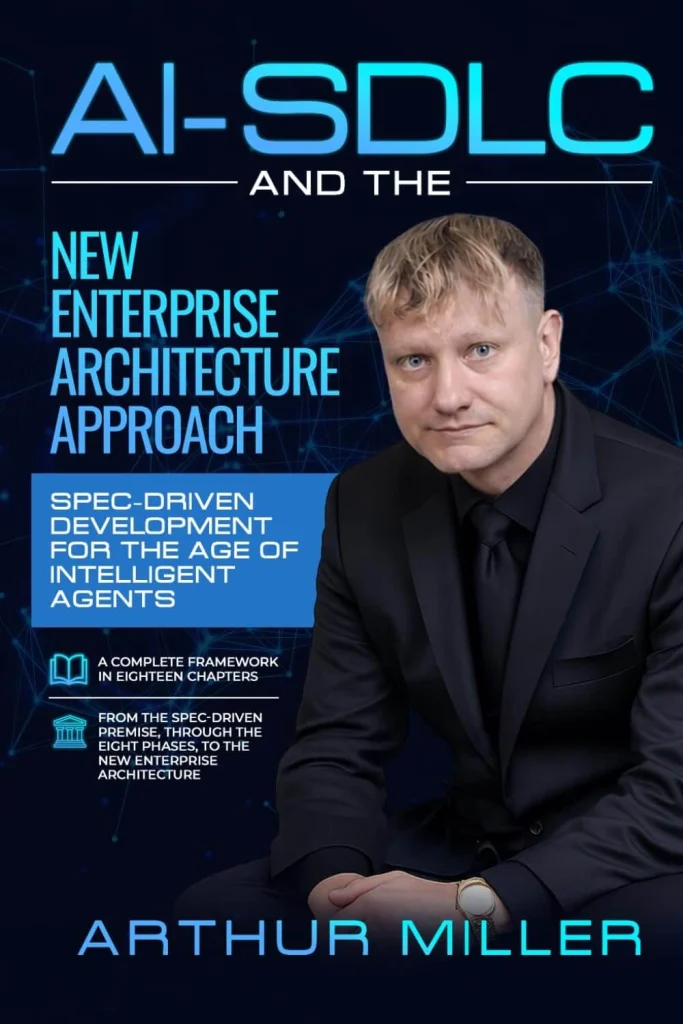
This is where most books on the topic fall apart. Arthur Miller’s AI-SDLC and the New Enterprise Architecture Approach doesn’t. It has a full migration chapter built around one rule: advance one cell at a time.
Content
The two ways teams fail
Miller names them clearly. The first is boiling the ocean: trying to reach full spec-driven generation everywhere at once, stalling under the weight, and giving the whole idea a bad reputation. The second is paralysis: agreeing the framework is right and never actually moving because no single step feels big enough.
The fix for both is small, reversible moves, each justified on its own.
Start with verification
This surprised me. You’d think the natural starting point is requirements. Miller argues the opposite: start with testing, for three reasons.
Generation is safest there, because a plausible-but-wrong test output fails visibly instead of silently. The Contracted level is achievable today with current tools. And the payoff is immediate: turning one acceptance criterion into a live, executable check gives you permanent protection against one class of defect.
After that, you follow your bottleneck. Where is work piling up? Where is drift causing the most firefighting? That’s your next move, not whatever a vendor happens to be selling.
Built to be used, not just read
A few things make this book unusually practical:
The maturity model is a grid, so you can locate each artifact’s level separately and plan realistic next steps.
Gate checklists spell out what must be true to pass each tollgate.
A metrics starter kit gives operational definitions, so you can measure your own results rather than trusting anyone’s headline numbers.
Appendix H is a troubleshooting reference. You look up a symptom the way you’d actually say it (“generation is fast but releases aren’t more frequent”), and it points you to the likely diagnosis and the chapter that covers it.
Miller also suggests reading paths for different roles. If you want to act this week, go straight to the verification chapter and then the migration playbook.
Who should read Arthur Miller’s AI-SDLC book
Executives weighing the investment, architects designing how work flows, engineering leads changing daily practice, and anyone evaluating AI dev tools who wants a framework that’ll outlast this year’s product lineup.
Get AI-SDLC and the New Enterprise Architecture Approach on Amazon and start your first move.
Published by Writers of the West.

Lisa’s the history buff who turns pages into portals to the past. She’ll transport you through time with her historical fiction recommendations and insightful reviews.